
"first coffee country"
30000 article(s) found

Latisa Manor, a Guatemalan coffee-producing country bordering Mexico to the north and Honduras to the south
Guatemala is located in the Central American Isthmus, bordering Mexico in the north and Honduras in the south. Due to the high mountains and volcanoes in the country, coupled with the careful care of Guatemalan farmers, the quality of Guanguo coffee appears to be quite excellent. The country's earliest record of growing coffee dates back to 1750, about 250 years ago, but at that time the coffee tree was only an ornamental flower in the garden; until 1800, Inou

Introduction to the clear flavor of Costa Rican Goddess Manor Coffee
It is called the legislative assembly, the unicameral system, the barber assembly, the exercise of legislative power and other important functions and powers. major government decisions need to be examined and approved by the legislative assembly, which is called the first power of the state. it is the highest legislature in the country, composed of 57 members. Members are directly elected by voters for a term of four years and are non-re-elected. The current legislative assembly was formed in May 2010, of which the new session was established on February 2, 2014.

The founder of banner coffee will raise at least $300 million in Hong Kong shares next year. Where will banner coffee's first store open? How many stores are there in the country?
On October 13, several media reported that MANNER Coffee, a new Chinese boutique coffee brand, plans to list on the Hong Kong Stock Exchange in 2022 next year, raising US $300 million. Subsequently, MANNERCOFFEE founder Han Yulong denied that the company had no correlation.

Flavor Clear, Acidic, Bright Costa Rican Fine Coffee BeansRegional Characteristics Flavor Taste Introduction
Costa Rica is located in the isthmus of Central America, belonging to North America, 10 N, 84 W. It is bordered by the Caribbean Sea to the east and the North Pacific Ocean to the west, with a coastline of 1290 kilometers (212 kilometers in the Caribbean Sea to the east and 1016 kilometers in the Pacific Ocean to the west). Costa Rica borders Nicaragua to the north (309 km) and Panama to the south-southeast (639 km). total

The volume and price of coffee exports from Yunnan have increased simultaneously.
The reporter recently learned from Kunming Customs that in the first three quarters of this year, Yunnan Province exported 63000 tons of coffee, an increase of 79.3 percent over the same period last year; the export volume was 1.39 billion yuan, an increase of 1.1 percent over the same period last year; and the average export price was 22.2 yuan per kilogram, up 14.8 percent. Yunnan coffee exports account for 56.5% of the country's total, ranking first among all provinces (autonomous regions and cities) in the country. According to historical data, it is Yunnan coffee in the second and third quarters.
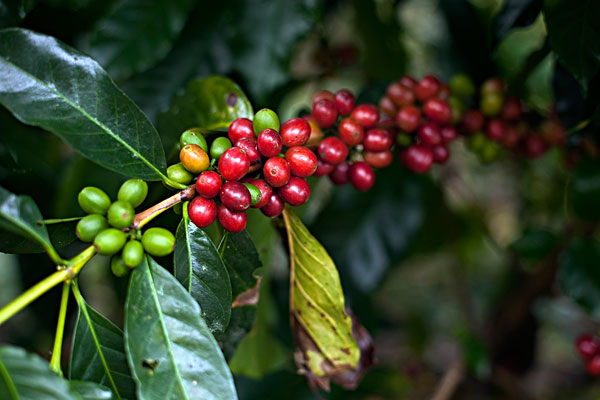
Boutique Coffee training course Pacamara Manor in El Salvador Micro-batch washing Pacamara
Variety origin Pacamara is an artificial hybrid of Pacas and Maragogype, which was first bred by Salvadoran research institutions in the 1950s (mostly 1958). The new variety is considered to be the result of the pursuit of large grain Arabica species and inherits the good characters of the parent plant. Pacas, who is of Bourbon descent, is a native variety of El Salvador.

Processing methods of characteristic flavor and taste of coffee beans in Duli Alba, Costa Rica
For more information on coffee beans, please follow the coffee workshop (Wechat official account cafe_style). The volcanic soil of Duli Alba, Costa Rica is very fertile and well drained. It is the first country in Central America to grow coffee and bananas because of its commercial value. Coffee and bananas are the country's main exports. In 1729, coffee was introduced from Cuba to Costa Rica

The unique African Dark Horse-- the Coffee Culture of Rwanda
We have never seen such a fast-growing producing area. In eight years, we have gone from a non-coffee producing country to one of the famous producing areas that can host international coffee competitions. This unprecedented growth rate is happening in front of our eyes. Geoff Watts Rwanda, vice president of Intelligentsia Coffee, is located in the southern equator of central Africa. It is a landlocked country with Tanzania to the east.
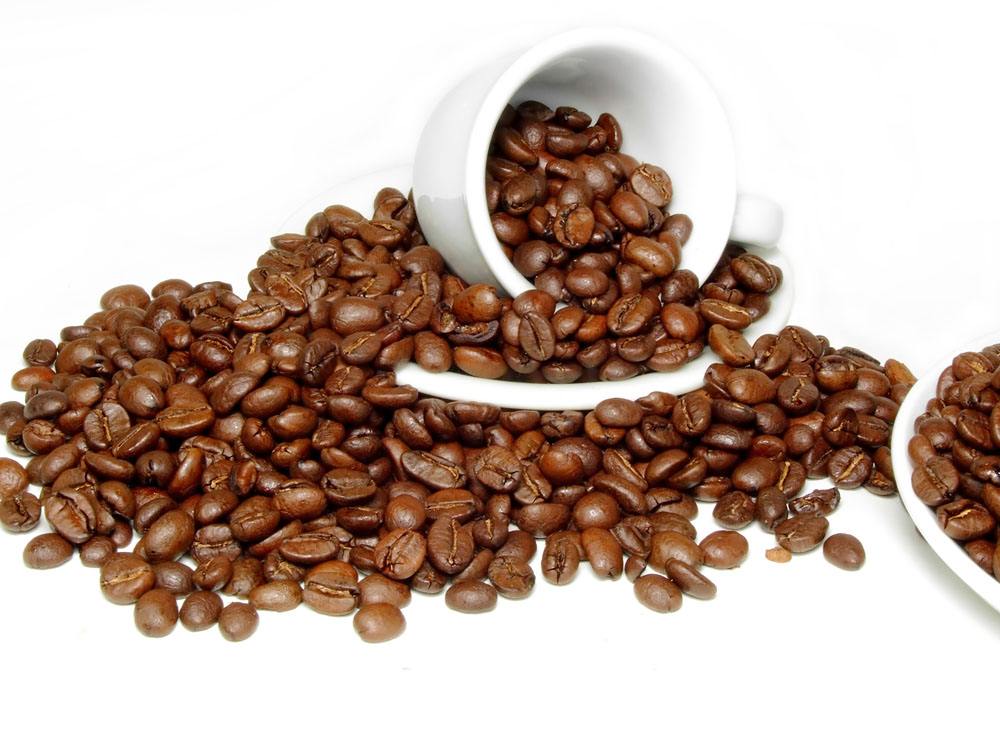
The historical origin of Rwandan coffee and the way it is handled
Following Kaiping (Wechat official account vdailycom) found that Beautiful Cafe opened a small shop of its own. Rwanda's economy is mainly agricultural. The population engaged in agriculture and animal husbandry accounts for 92% of the country's population. The main cash crops are coffee, tea and cotton. Because it is an agricultural and animal husbandry country, coupled with the loss of many young workers caused by the genocide in 1994, they are not rich in the first place.
The country of Mocha-- Yemen and Ethiopia introduced Mocha pot gold coffee
The word mocha first emerged in Europe in the 16th and 17th century, because coffee imported from the Arab world was transported from the port of Mocha in Yemen, so at first people used mocha as a synonym for coffee, so until the invention of the mocha pot in the 20th century, people took it for granted that this kind of coffee brewing apparatus was called mocha pot. As for the difference between Ethiopian mocha and Yemeni mocha

Coffee producing area there are 53 coffee producing areas in the world. Suriname coffee.
Surinam Suriname Suriname (Surinam) is the first country in South America to grow coffee, and Norway was once a major importer of its coffee products. However, the country's output is very small today, and it is mentioned here only for historical reasons. The Dutch, who settled in Suriname in 1667, introduced coffee trees from Java in the early 18th century. The first coffee trees were made by Asmst.

Coffee producing area Coffee introduction to Suriname
Surinam, an important name in coffee history, was the first country in South America to grow coffee, and Norway was once a major importer of its coffee products. However, the country's output is very small today, and it is mentioned here only for historical reasons. The Dutch, who settled in Suriname in 1667, introduced coffee trees from Java in the early 18th century. The first batch of coffee trees were made by A.
Basic knowledge of boutique coffee Suriname coffee
An important name in the history of coffee. Suriname (Surinam) was the first country in South America to grow coffee, and Norway was once a major importer of coffee products. However, the country's output is very small today, and it is mentioned here only for historical reasons. The Dutch, who settled in Suriname in 1667, introduced coffee trees from Java in the early 18th century. The first coffee trees were made up of

Coffee knowledge coffee producing area Suriname
Suriname (Surinam) was the first country in South America to grow coffee, and Norway was once a major importer of coffee products. However, the country's output is very small today, and it is mentioned here only for historical reasons. The Dutch, who settled in Suriname in 1667, introduced coffee trees from Java in the early 18th century. The first batch of coffee trees was given by the mayor of Asmstedan.

Boutique coffee beans knowledge coffee producing area Suriname
Suriname (Surinam) was the first country in South America to grow coffee, and Norway was once a major importer of coffee products. However, the country's output is very small today, and it is mentioned here only for historical reasons. The Dutch, who settled in Suriname in 1667, introduced coffee trees from Java in the early 18th century. The first batch of coffee trees was given by the mayor of Asmstedan.

A brief introduction to the description of the flavor, taste and aroma characteristics of fine coffee beans in Hasunda Manor, Equatorial country.
As the local arable land is very limited, Galapagos coffee is very rare. Since Manuel J.Cobos first cultivated coffee here in the late 19th century, the coffee seeds here have never been hybridized or changed. Therefore, coffee on Galapagos Island is considered to be one of the purest Arabica coffee beans in the world. Galapagos coffee has excellent quality and is fertile.
An important name in the history of coffee Suriname
An important name in the history of coffee. Suriname (Surinam) was the first country in South America to grow coffee, and Norway was once a major importer of coffee products. However, the country's output is very small today, and it is mentioned here only for historical reasons. The Dutch, who settled in Suriname in 1667, introduced coffee trees from Java in the early 18th century. The first coffee trees were made up of

An important name in the history of Suriname coffee
Surinam, an important name in coffee history, was the first country in South America to grow coffee, and Norway was once a major importer of its coffee products. However, the country's output is very small today, and it is mentioned here only for historical reasons. The Dutch, who settled in Suriname in 1667, introduced coffee trees from Java in the early 18th century. The first coffee trees were made by Az.

An important name in the history of coffee Suriname
Surinam, an important name in coffee history, was the first country in South America to grow coffee, and Norway was once a major importer of its coffee products. However, the country's output is very small today, and it is mentioned here only for historical reasons. The Dutch, who settled in Suriname in 1667, introduced coffee trees from Java in the early 18th century. The first coffee trees were made by Az.

An important name in the history of Suriname coffee
An important name in the history of Surinam coffee is Suriname, the first country in South America to grow coffee, and Norway was once a major importer of its coffee products. However, the country's output is very small today, and it is mentioned here only for historical reasons. The Dutch, who settled in Suriname in 1667, introduced coffee trees from Java in the early 18th century. The first batch of coffee trees